



There are more and more unemployed academics in Switzerland, which is why education experts advise starting a vocational apprenticeship instead of following the traditional path from grammar school to university.
But should one really be influenced by a trend? There is much to be said for pursuing one's career aspirations, even if it is an academic job, and not being deterred by trends.
In particular, it cannot be said that artificial intelligence (AI) will eliminate all academic jobs. Nor can it be said that all skilled trades jobs will be spared from technological development.
Register now for a grammar school preparation course!
Table of contents
- More and more unemployed academics
- Reasons for rising unemployment among academics
- Are tradespeople less threatened by artificial intelligence?
- Why career aspirations should be taken seriously
- Conclusion
More and more unemployed academics
An analysis by the Swiss Employers' Association has shown that the number of unemployed academics, specifically university master's graduates, has risen by 70 per cent since 2010. In contrast, unemployment among people with basic vocational training has fallen by 40 per cent since 2010.
The Employers' Association explains these figures primarily by the fact that vocational training – from apprenticeships to higher technical colleges – is closer to practical experience, which is why graduates are better suited to the vacancies available – keyword ‘matching’.
The skills learned at university, on the other hand, are not as market-oriented, which is why university graduates find it more difficult to enter the labour market.
At the same time, according to the Employers' Association, too many academics are being produced, as their share of the permanent resident population in Switzerland has risen by over 10 per cent since 2010, while the share of those with vocational training has declined. However, this objection fails to recognise that the permanent resident population of Switzerland also includes immigrants with B and C residence permits, and that the proportion of people with tertiary education (university or university of applied sciences degree) among immigrants is extremely high at around 56 per cent, compared to the rest of the permanent resident population, where the proportion is only 36 per cent.
It was therefore not without reason that the NZZ ran the headline in 2024: ‘Fatal dependence on foreign academics: Switzerland invests too little in education’. In the last ten years, Switzerland has failed to train 30,000 doctors alone. Considering that training a doctor in Switzerland costs around CHF 600,000, the state has saved billions of Swiss francs over the years by reducing the number of training places available.
But there are many other professions in which Swiss employers have to recruit academics from abroad, including (as of 2024) in particular:
- Physicists
- Chemists
- Mathematicians
- Statisticians
- Biologists
- Software specialists
- Engineers
- Industrial managers
- Scientific professions
- University/college lecturers
- Financial specialists
Despite this background, the Swiss Employers' Association is not alone in sounding the alarm that there are too many unemployed academics in Switzerland. Education expert Ursula Renold, for example, told the Tagesanzeiger newspaper that she believes unemployment among academics has now reached almost the Swiss average of 4.3 per cent. The unemployment rate among apprenticeship graduates, on the other hand, is significantly below the Swiss average. In view of these figures, Renold recommends that young people start a vocational apprenticeship if in doubt. Other experts, such as education expert Rudolf Strahm, also advise vocational training.
The figures from the Employers' Association do not look quite so dramatic. They state that education still protects against unemployment. For example, the unemployment rate among university master's graduates one year after graduation is below the Swiss average. And overall, the unemployment rate among people with tertiary education in October 2025 was 2.2 per cent, below the rate for people with secondary II qualifications, which was 2.7 per cent.
However, there are indeed worrying figures, for example from the Swiss Network for Career Advice Centres, which, according to the Tagesanzeiger newspaper, found that the number of entry-level positions for university graduates in the first half of 2025 had fallen by 17 per cent compared to the previous year. If we compare this with the total number of advertised positions in German-speaking Switzerland, the Adecco Group Swiss Job Market Index shows that this figure only fell by 7 per cent in the same period. One thing is certain: the labour market is weakening.
Reasons for rising unemployment among academics
The reasons for the rise in unemployment among graduates are manifold and also depend on the respective field of study or industry.
Artificial intelligence
One of the reasons why more and more academics are unemployed, according to the Tagesanzeiger newspaper, is that artificial intelligence is taking over tasks that would otherwise be performed by academically trained career starters.
However, such statements must be viewed with caution, because given the high error rate of AI assistants, it is doubtful that AI is already capable of taking over academic tasks on a large scale. Studies have shown that 37 to 45 per cent of the answers provided by AI assistants contain serious errors, as reported by the news portal Watson.
A recently published study examining the responses of ChatGPT, Microsoft Copilot, Google Gemini and Perplexity concluded that 45 per cent of all responses from these AI assistants contained at least one significant flaw in news content. In 31 per cent of the responses, the source reference was misleading, incorrect or missing. And in 20 per cent of cases, the facts were demonstrably false, such as hallucinated details, fabricated quotes or outdated information.
Incidentally, AI models are not competition for journalists – at least not at the moment – because AI chatbots do not provide verified facts as answers, but rather probabilities that the AI calculates based on existing information about past events. Ideally, these probabilities correspond to the facts, but they often deviate from them. Journalists, on the other hand, provide facts about unknown and unexpected events, usually using only confirmed facts, facts from particularly trustworthy sources (privileged sources) or, in the case of unconfirmed facts from non-privileged sources, having these facts confirmed by two different sources.
Some creative professionals fear being replaced by AI. But these fears are not entirely justified in light of recent studies. Theoretically, with the right AI tools, it is already possible to replace entire graphics departments and film sets, including the actors. However, when it comes to creativity, AI models are limited, as a study by ChatGPT-4o has shown. Among other things, ChatGPT-4o would have difficulty distinguishing between original and conventional ideas, a skill that humans possess.
Even with AI, film production is still a complex undertaking. This year's Coca-Cola commercial was produced using only AI tools. But the five-person team behind it had to enter 70,000 prompts in 30 days, and attentive viewers still noticed, among other things, that the number of tyres on the trucks was not consistent throughout the video. Perfect is something else.
There are also reports, for example from an IT security researcher and a mathematician, that checking AI responses for accuracy takes just as long as if the task had been performed entirely without an AI agent. The use of AI therefore has no added value, at least not in the specific use cases of these two specialists.
Outsourcing
Computer scientists are also affected by increasing automation, but also by offshoring, as Martin Meyer, Head of Operations at Adecco Switzerland, told the Tagesanzeiger newspaper.
Affected computer science graduates report a labour market that has been swept clean. This negative development began in 2023. Since then, it has become increasingly difficult to find an entry-level position.
In the first half of 2025 alone, job offers for computer scientists with university degrees fell by 31 per cent compared to the previous year. In addition, unemployment in the IT sector has increased in recent years. In September 2022, 1,700 computer scientists were registered as unemployed in Switzerland, while in 2025 there were more than twice as many unemployed computer scientists, at 4,000.
Merger of Credit Suisse and UBS
The Zurich labour market also presents a particular challenge. The merger of Credit Suisse and UBS has led to many job losses in the banking sector, which is so important for Zurich. UBS estimates that the merger will result in 3,000 job losses across Switzerland.
As Zurich is Switzerland's banking centre, most of these jobs are likely to be lost in the canton of Zurich. Business administration and finance graduates are particularly affected by the job cuts at the merged UBS/CS.
Weak EU economy, crisis among German car manufacturers, strong Swiss franc, US tariffs
The weak EU economy, the crisis in the German automotive industry, the strong Swiss franc and the 39 per cent US tariffs imposed in the summer of 2025 are also having a negative impact on the Swiss labour market.
At least in the case of the US tariffs, there was a positive turn of events for Switzerland in mid-November 2025, as the US agreed with Switzerland on a flat tariff rate of 15 per cent, retroactive to 14 November 2025.
Are tradespeople less threatened by artificial intelligence?
In connection with rising unemployment among academics, the Tagesanzeiger newspaper claims that skilled tradespeople are less threatened by artificial intelligence than academics. Experts would also agree with this, as reported by the Beobachter newspaper, explaining why professions such as carpenters and plumbers are currently experiencing a rush of apprentices, precisely because they are supposedly less threatened by AI than academic jobs.
However, the prediction that skilled trades jobs are less at risk from AI does not take into account, or at least not sufficiently, the fact that the next wave of modernisation is expected to be in robotics. The production of humanoid robots is already in full swing, particularly in China, where mass production of humanoid robots for industrial use has already begun, notably with the Walker S2 robot from the Chinese company Ubtech. As was recently announced, Walker S2 robots are also to be used for border controls on the Chinese-Vietnamese border.
But Germany is also starting mass production in the humanoid robot segment for industrial applications. At the beginning of 2026, the Munich-based robotics company Agile Robots plans to start series production of its humanoid robot Agile One. This robot will be capable of operating machines, performing assembly tasks, carrying out precise manipulations, handling materials and performing pick-and-place tasks.
Even if these humanoid robots cannot yet completely replace skilled workers, it cannot be ruled out that humanoid robots will be able to do so in the near future. It is therefore unlikely that skilled trades will remain immune to the rapid development of robotics in the long term.
In the private sphere, humanoid robots will probably initially take on tasks such as household and gardening help, as well as care for the elderly and sick.
Why career aspirations should be taken seriously
When choosing a career, it is important to ensure that you enjoy the work you do. Ideally, you should turn your hobby into your profession.
After all, you spend a large part of your life at work, so it should not become an excessive and unpopular permanent burden.
Of course, the level of earnings can also be a motivating factor in choosing a particular career. However, you should not base your career choice solely on salary, especially since even with a low starting salary, you still have the opportunity to achieve a solid salary level through promotions. In particular, the option of continuing your studies after your vocational apprenticeship with a vocational baccalaureate diploma opens up the possibility of qualifying for more responsible tasks within the company and thus the chance of higher remuneration.
Find out more about BMS preparation now!
Conclusion
Recommendations from education experts that today's youth should take refuge in skilled trades in order to protect themselves from competition from artificial intelligence should be treated with great caution given the pace of development of humanoid robots. After all, it cannot be ruled out that many skilled trades will be performed by robots in the near future. Currently, the Ubtech Walker S2 robot still costs USD 180,000 (approximately CHF 143,000). However, Tesla's Optimus robot is expected to be priced at less than USD 20,000 (approximately CHF 16,000) in the future. And even today, other manufacturers offer simple humanoid robots for less than CHF 10,000.
However, it is also highly questionable whether all young people will be persuaded to learn a profession simply because it is claimed to be crisis-proof. Until now, many children have been consciously or unconsciously influenced by their parents when choosing a career, and have chosen a profession that is similar to that of at least one parent. This is because children are already familiar with their parents' professions. In addition, parents can use their connections at work to help their children start their careers.
Incidentally, there is another approach circulating with regard to the expected impact of AI on the labour market, which does not assume that there will be a significant loss of jobs due to the disappearance of certain professions. Rather, this other approach assumes that certain tasks in individual professions will be replaced by AI, but that the respective profession itself will remain. At most, the workload could be reduced if, for example, AI takes over 15 per cent of the work previously done in a particular profession.
As we have seen, there are various factors that are currently having a negative impact on the Swiss and Zurich labour market, especially for academics. However, this dip may be short-lived, which is why you should not be influenced by trends when choosing a career. An important advantage of an academic education is that at grammar school and university, you learn abstract thinking, which is important for solving the problems of the future.
Book a grammar school preparation course now!
Sources
- Gymnasium Preparation Zurich - Preparatory courses for every need (last accessed: 15.12.2025)
- A country with a shortage of skilled workers – and increasingly unemployed academics (last accessed: 15.12.2025)
- Labor migration – facts and figures at a glance (last accessed: 15.12.2025)
- Fatal dependence on foreign academics: Switzerland invests too little in education (last accessed: 15.12.2025)
- Advantages of vocational training The number of unemployed graduates is rising. Should more young people do an apprenticeship? (last accessed: 15.12.2025)
- Interview with Rudolf Strahm: "A young university graduate is promoted to boss – and not the experienced specialist" (last accessed: 15.12.2025)
- Tough start to a career: 700 applicants for one position: Why are young academics having such a hard time right now? (last accessed: 15.12.2025)
- Almost every second AI answer is faulty (last accessed: 15.12.2025)
- SRF - Source verification (last accessed: 15.12.2025)
- Despite stigma and fears about the future, creatives are using AI to increase productivity (last accessed: 15.12.2025)
- The paradox of creativity in generative AI: high performance, human-like bias, and limited differential evaluation (last accessed: 15.12.2025)
- Critics find flaws in Coca-Cola's new commercial (last accessed: 15.12.2025)
- Coca-Cola presents AI as creativity and uses it to generate a Christmas commercial (last accessed: 15.12.2025)
- The new major bank: 3,000 jobs are now being cut – the most important questions and answers about the UBS deal (last accessed: 15.12.2025)
- Trade relations Switzerland USA (last accessed: 15.12.2025)
- AI can go to hell - I'm going to be a craftswoman! (last accessed: 15.12.2025)
- Chinese Ubtech humanoids deployed at border control? (last accessed: 15.12.2025)
- Domestic humanoid robotics: Agile Robots produces its industrial humanoid robot in Bavaria (last accessed: 15.12.2025)
- High income without a university degree thanks to the dual education system (last accessed: 15.12.2025)
- BMS | FMS Preparation Course (last accessed: 15.12.2025)
- Ubtech Walker S2 (last accessed: 15.12.2025)
- AI is proving to be the Münchhausen syndrome of the labour market (last accessed: 15.12.2025)

Training quality: Vocational training worse than reputation
The quality of vocational training in Switzerland is heavily criticized; vocational training is worse than its reputation – reports and surveys confirm this.
Rychenberg cantonal school: new arts and sports grammar school
At Rychenberg Cantonal School in Winterthur, a second arts and sports grammar school in the canton of Zurich is set to open in the 2029/2030 academic year.
Switzerland: Early selection in schools - pros and cons
Many cantons in Switzerland are known for the early school selection, often at the age of 12 or 13. Read the arguments for and against here in our article.
Is the Swiss Matura more difficult than the German Abitur?
In this comparison, you'll find the answer whether Swiss Matura or German Abitur is more difficult, and what the difference is between Matura and Abitur.

15 focus subjects at grammar schools 2029/2030 in Zurich
Starting in 2029/2030 school year, 15 focus subjects at grammar schools in Canton Zurich will replace current 13 focus subjects and 6 grammar school profiles.
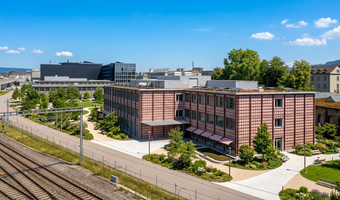
New grammar school in Zurich: «Kantonsschule Aussersihl»
With Hohlstrasse branch becoming independent as ‘Kantonsschule Aussersihl’ (KAS), Zurich-West gaining new grammar school and a new secondary technical school.
Grammar school graduation quota - canton controls since 2007
Grammar school graduation quota in Canton Zurich is managed by the Department of Education, specifically through the pass rate, various control mechanisms.
Preparatory institutes alarmed: Sec school pupils know nothing
Exam preparation institutes such as Lern-Forum sounding alarm: Secondary school students have significant gaps in knowledge of math and in French vocabulary.
Results of 2026 grammar school exam in the Canton of Zurich
Results of the 2026 grammar school exam, published by Canton Zurich in mid-May 2026; statistics on ZAP results for FMS, HMS, IMS and BMS will also be announced.

How long does grammar school last in Switzerland?
The length of grammar school varies by canton; there is no single answer to how long grammar school lasts in Switzerland; here you find a list by canton.
